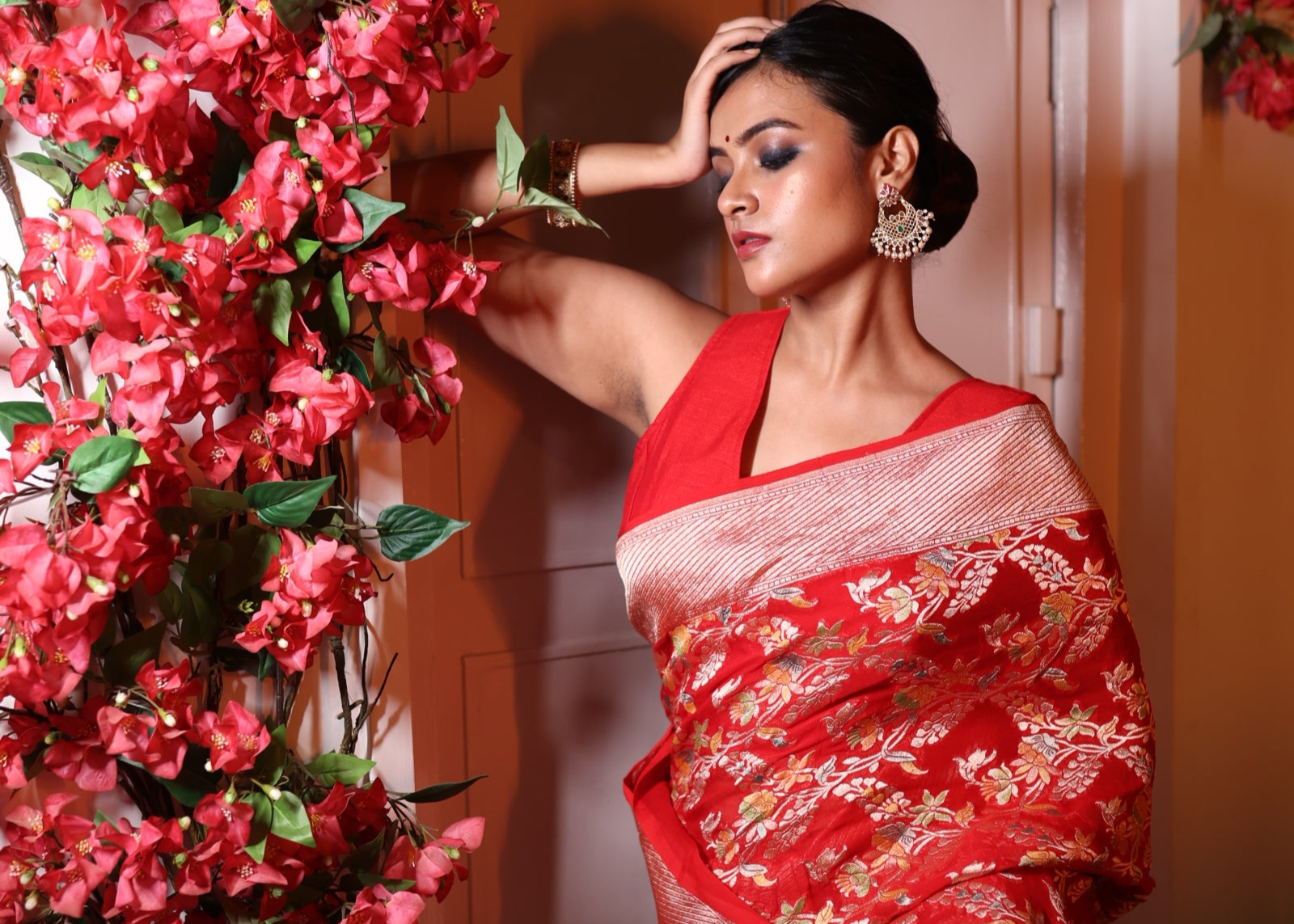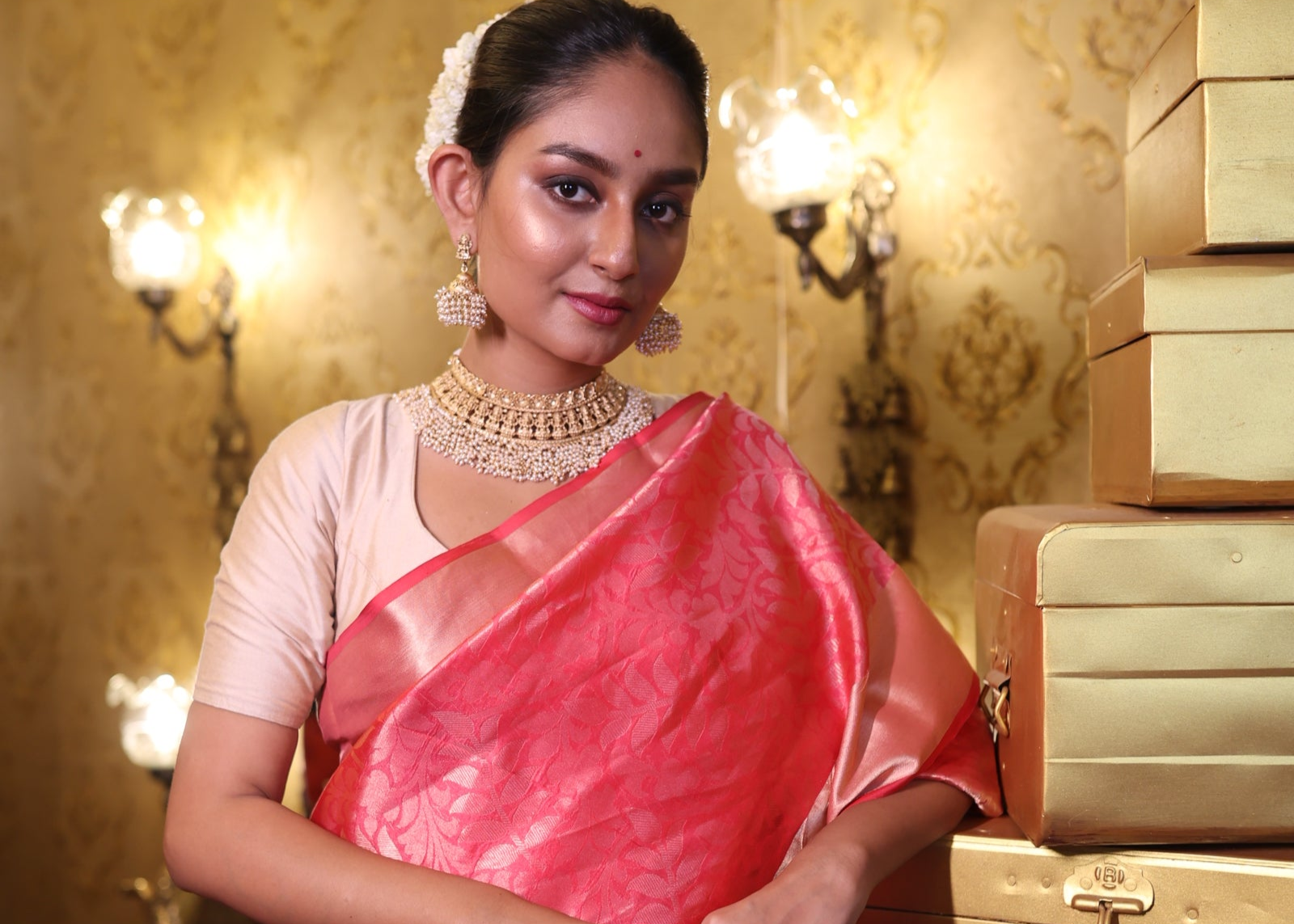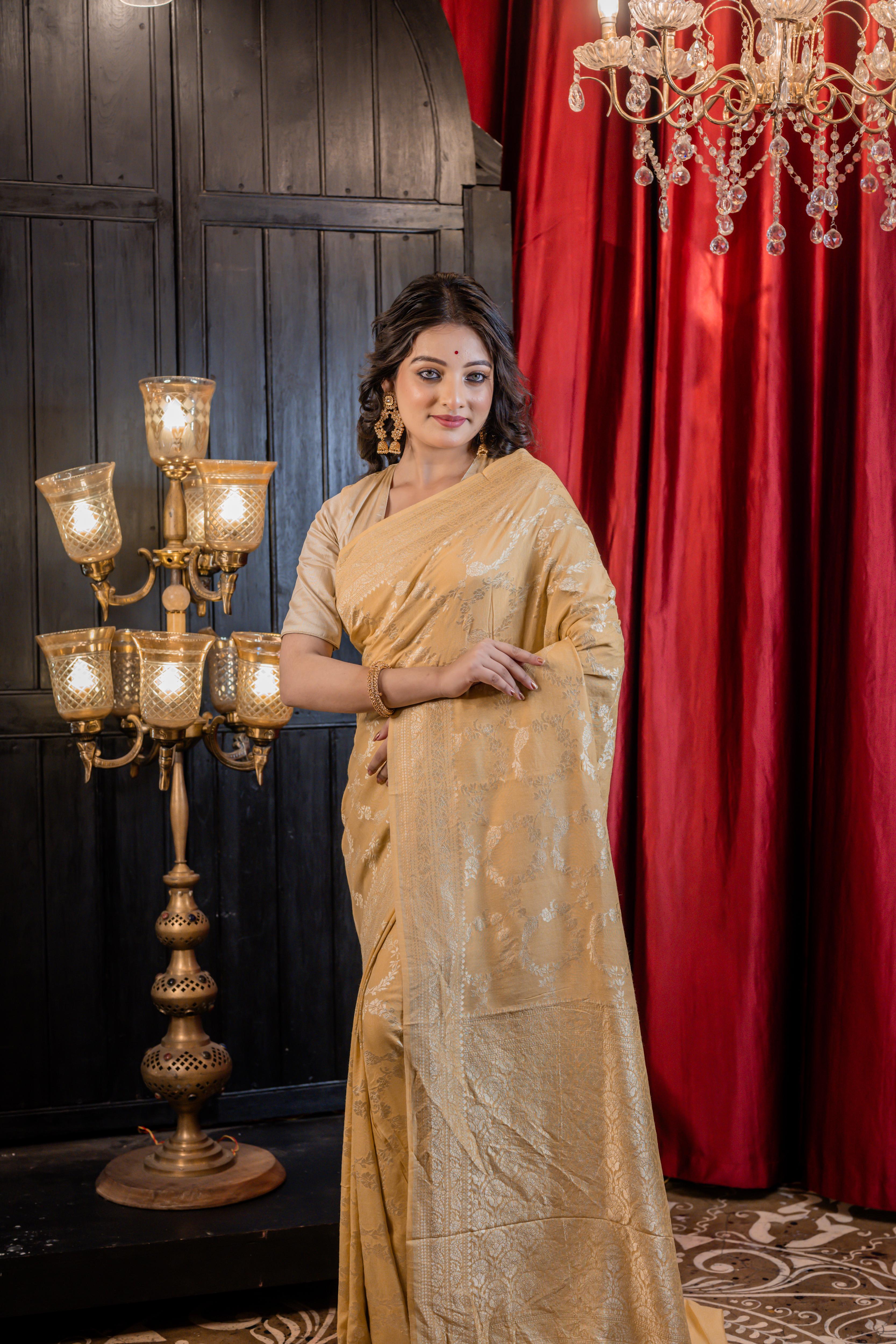

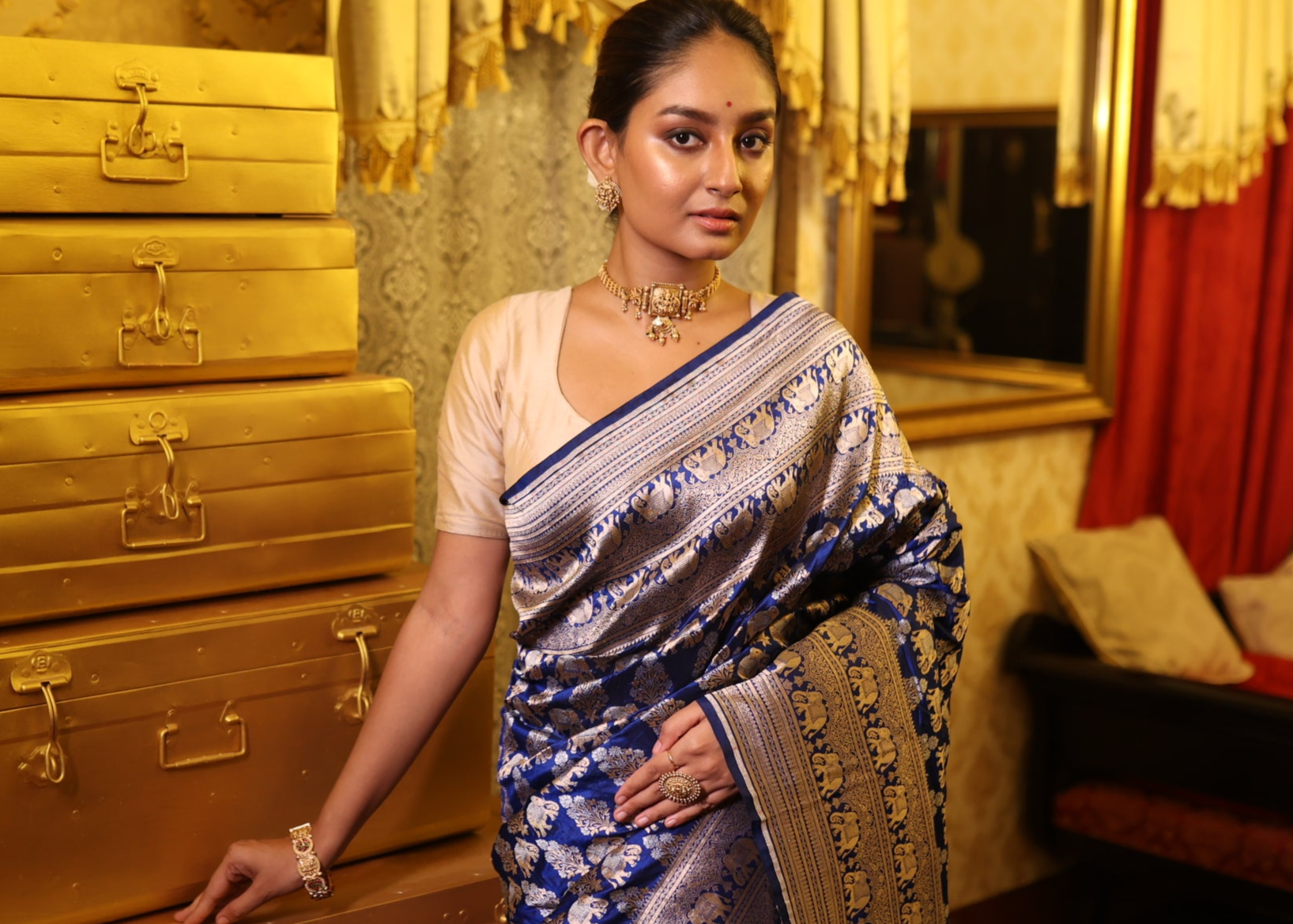
The Story of Banarasi Weaves: Royalty in Every Thread

A Banarasi saree is not just attire; it’s a living heirloom, whispering tales of royalty, craftsmanship, and cultural richness. From the temples and streets of Varanasi to the global ramps of fashion, Banarasi sarees have etched their legacy into the heart of Indian textile heritage. These intricate masterpieces are more than fabric and thread; they are carriers of centuries-old traditions, artistry, and elegance.
The Origin of Banarasi Weaves: A Glimpse into the Past
The story of the Banarasi saree is woven into the very soil of Varanasi (also known as Banaras or Kashi), one of the world’s oldest inhabited cities. With its spiritual energy and cultural history, Varanasi became a hub of weaving traditions as early as the 14th century. However, it was during the Mughal period, particularly under Emperor Akbar, that the Banarasi weave flourished.
Mughal emperors brought Persian motifs and techniques to Indian looms. Their admiration for art, textiles, and architectural finesse translated into motifs such as floral vines (bel), mango patterns (ambi), jhallar borders, and animal figures. These were intricately woven using zari – gold and silver threads – lending grandeur and shimmer to each saree.
The blending of Persian aesthetics with Indian sensibilities marked the birth of what we now know as the Banarasi saree. It was an attire once reserved for royalty, designed to denote wealth, power, and artistic taste.
Decoding Banarasi Weaves: Types and Techniques
There are several varieties of Banarasi sarees, each with unique characteristics:
- Katan: Made of pure silk threads. Katan sarees are known for their firm texture and are often heavily decorated with zari.
- Organza (Kora): A sheer fabric woven with zari and silk. These sarees are often adorned with beautiful brocade patterns.
- Shattir: The most cost-effective Banarasi, usually used for contemporary styles.
- Georgette: Lightweight and fluid, often used for modern Banarasi sarees with subtle embroidery.
The Intricate Process: How a Banarasi Saree is Made
Weaving a Banarasi saree is a labor of love. It involves a meticulous multi-step process that often engages an entire family of artisans:
-
Design and Blueprint
Each design begins as a hand-drawn sketch on graph paper, scaled to the exact dimensions of the saree. Designers plot every detail – from the border width to the smallest motif.
-
Punch Card Creation
The design is translated into punch cards, which control the weaving pattern on the jacquard loom. Hundreds of punch cards are prepared, each corresponding to a single line of the design.
- Dyeing the Threads
Silk threads are dyed in desired hues using eco-friendly colors. Artisans ensure that the color remains rich and uniform across the warp and weft. - Weaving
The weaving process is done on hand-operated looms. It can take 15 days to six months to complete one saree, depending on its complexity. Often, 2-3 weavers work simultaneously on a single saree, passing the shuttle with synchrony and precision. - Finishing Touches
After weaving, sarees undergo finishing processes like brushing, polishing zari, checking for errors, and hemming. They are then carefully folded and stored with protective layers.
The Language of Motifs: Symbolism and Meaning
Banarasi sarees are more than visual appeal. The motifs used often carry deep symbolic meanings:
- Kalga & Bel: Derived from Persian art, these floral patterns signify fertility and prosperity.
- Butidar (Buti): Small floral or leaf motifs woven with gold and silver zari, traditionally seen as auspicious.
- Jhallar Border: A jagged edge design resembling a string of leaves, representing continuity and celebration.
- Peacocks & Elephants: Denote grace, royalty, and strength.
Each motif is not just ornamental but a narrative, turning every saree into a storybook.
Maayavi's Take on Banarasi: Modern Heritage
At Maayavi, we honor this legacy while reimagining it for today’s woman. We work with master weavers in Varanasi who have preserved these traditional techniques for generations. Our Banarasi sarees reflect the depth of this heritage but are crafted with the modern wearer in mind:
- Lightweight Drapes: We use finer silks and techniques that reduce weight without compromising beauty.
- Contemporary Palettes: Pastels, muted golds, and rose tones cater to urban aesthetics.
- Minimalist Motifs: We offer subtler versions of traditional patterns for everyday elegance.
This modern interpretation allows the Banarasi saree to move from grand occasions into everyday luxury.
Banarasi Beyond Weddings: Styling and Versatility
Traditionally seen at weddings and festivals, the Banarasi saree is now breaking the mold. Here are some ways to style it for different occasions:
-
Wedding & Festive Wear
- Opt for a deep-toned Banarasi with intricate zari.
- Pair with heavy kundan jewelry, a potli bag, and a sleek bun adorned with fresh flowers.
-
Cocktail & Evening Events
- Choose a lighter Banarasi in beige, champagne, or blush.
- Style with a contemporary halter blouse or velvet jacket.
- Add a clutch and heels for modern glam.
-
Work & Day Functions
- Go for a pastel or georgette Banarasi.
- Team with a collared blouse and minimal earrings.
- Use a structured handbag and soft makeup for a professional look.
-
Fusion Look
- Pair with a crop top or turtleneck.
- Add sneakers or boots.
- Layer with a denim or leather jacket for edgy contrast.
Supporting Weaving Communities: The Heart of Maayavi
Each Maayavi Banarasi saree supports traditional artisans who form the backbone of our collections. Our mission is not just to sell beautiful products, but to:
- Sustain rural livelihoods
- Encourage next-gen weavers
- Revive dying looms
- Promote fair wages and ethical sourcing
When you wear Maayavi, you become part of a larger story – one that empowers women, artisans, and heritage.
Banarasi in Pop Culture: A Style Icon
From Rekha’s resplendent Banarasis on red carpets to Deepika Padukone’s wedding saree, Banarasi weaves have long been associated with Indian glam. Designers like Sabyasachi, Raw Mango, and Anita Dongre have reintroduced Banarasis to millennial and Gen-Z wardrobes.
Now, Instagram influencers pair Banarasi sarees with sneakers, belts, corsets, and even denim jackets – proof of its timeless appeal.
Why Every Wardrobe Needs a Banarasi Saree
A Banarasi saree is more than a fashion choice:
- It is timeless: It never goes out of style.
- It is heritage-rich: You carry centuries of culture in six yards.
- It is empowering: You support a community with every purchase.
- It is versatile: From bridal to boardroom, it adapts effortlessly.
Whether you inherit it, receive it as a wedding gift, or buy it for yourself, a Banarasi saree will always hold emotional and aesthetic value.
Final Drapes: The Future of Banarasi
As slow fashion gains momentum, Banarasi sarees are emerging as both luxury and legacy. At Maayavi, we aim to continue this journey by:
- Offering limited-edition weaves
- Hosting artisan showcase events
- Launching storytelling packaging
- Building a community that celebrates saree culture
Let your wardrobe tell a story. Let your saree speak volumes. Choose Maayavi Banarasi sarees – where every thread is royalty reborn.